Could SAINT Be the Next Step for Complex Mental Health Conditions?
What if the future of mental health care wasn’t years away but already here? For people living with conditions like bipolar depression or post-traumatic stress disorder (PTSD), traditional treatment can often feel like a cycle of trial and error. Medications may not always bring full relief, and therapy alone sometimes isn’t enough. That’s why interest is growing in SAINT TMS treatment, a promising, accelerated approach to transcranial magnetic stimulation (TMS) that is now available beyond research settings.
At BrainHealth Solutions, we are proud to be the first commercial SAINT TMS provider in Orange County, offering access to this groundbreaking therapy. In this article, we’ll explore what SAINT is, how it differs from standard TMS, and what early research says about its potential for conditions like bipolar depression and PTSD. You’ll also learn what makes SAINT treatment unique and whether it may be an option worth considering for yourself or a loved one.
Understanding the Basics: What Is SAINT TMS Treatment?
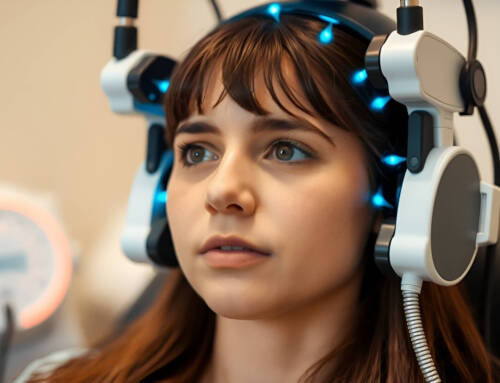
SAINT stands for Stanford Accelerated Intelligent Neuromodulation Therapy. It’s a specialized form of repetitive TMS (rTMS), which uses gentle magnetic pulses to stimulate specific regions of the brain involved in mood regulation. Unlike traditional TMS, which typically requires 6 weeks of daily sessions, SAINT condenses treatment into a much shorter timeframe, often as little as five days.
The therapy doesn’t just speed up the process. It also tailors stimulation to each individual by using advanced brain imaging to precisely target the area most associated with depression symptoms. This personalization is what makes SAINT stand out from earlier versions of TMS.
At BrainHealth Solutions, we’re committed to offering safe, effective, and compassionate care. Being the first commercial site in Orange County to provide SAINT means people in our community no longer have to travel to research centers to access this advanced treatment.
Why Look Beyond Traditional Treatments?
Bipolar depression and PTSD are among the most challenging mental health conditions to treat. According to the National Institute of Mental Health (NIMH), about 4.4% of U.S. adults experience bipolar disorder at some point in their lives. Many of them struggle more with the depressive episodes than the manic ones. For PTSD, the statistics are equally striking, about 5% of American adults live with PTSD in any given year, according to the U.S. Department of Veterans Affairs.
Standard treatments often include medications like mood stabilizers, antidepressants, or antipsychotics, along with psychotherapy approaches such as cognitive-behavioral therapy (CBT). While these options help many people, they don’t work for everyone. Side effects, incomplete relief, or long waits for improvement can leave individuals still searching for answers.
This is where SAINT TMS treatment could offer new hope. By rapidly stimulating specific brain circuits, SAINT may provide faster symptom relief than what is typically seen with medications or even conventional TMS.
Early Research on SAINT and Bipolar Depression
Most of the published studies on SAINT so far have focused on treatment-resistant major depressive disorder (MDD). In fact, a groundbreaking Stanford trial reported remission rates as high as 79% within days, compared to much lower remission rates seen with traditional antidepressants or even standard TMS.
But what about bipolar depression? While research is still emerging, early findings suggest that the same brain circuits involved in major depression also play a role in bipolar depression. Some pilot studies are beginning to explore whether SAINT can be effective in helping stabilize mood and reduce depressive episodes in people with bipolar disorder.
It’s important to note that clinical evidence is still in its early stages. Larger, long-term studies are needed before SAINT can be considered a standard treatment for bipolar depression. Still, the rapid results seen in major depression have encouraged researchers and clinicians alike to consider SAINT’s potential for this more complex condition.
Could SAINT Support People Living with PTSD?
PTSD is characterized by intrusive memories, hyperarousal, and emotional numbness following a traumatic event. For many people, these symptoms persist for years despite therapy and medication. This is why alternative approaches like neuromodulation are being studied so closely.
Preliminary data suggests that TMS, and by extension, SAINT, may help reduce PTSD symptoms by calming overactive brain networks that respond to fear and stress. In fact, the U.S. Department of Defense has funded multiple studies investigating TMS for veterans with PTSD. While SAINT-specific research for PTSD is still limited, its precision targeting and accelerated schedule make it a promising candidate.
Some clinicians are already exploring SAINT for individuals with both depression and PTSD, especially since these conditions often overlap. For example, people with PTSD are at higher risk of developing depressive symptoms, making a treatment that addresses both conditions highly valuable.
What Makes SAINT Different from Standard TMS?
One of the most common questions patients ask is: how is SAINT really different from the TMS that’s already FDA-approved? The differences are significant:
- Speed: Traditional TMS takes 6 weeks, with one session per day. SAINT condenses treatment into 5 days, with multiple sessions each day.
- Precision: SAINT uses advanced imaging (fMRI) to identify the exact spot in the brain to stimulate, rather than relying on generalized placement.
- Effectiveness: Early trials suggest higher remission rates compared to standard TMS, especially for treatment-resistant depression.
Because of these differences, SAINT is sometimes described as a “next-generation” TMS approach. Patients who may have tried and not fully responded to standard TMS could potentially benefit from this more advanced method.
Safety and Considerations
Like any medical treatment, SAINT TMS has considerations to weigh. The most commonly reported side effects include mild headaches or fatigue, which typically resolve quickly. Serious side effects are rare, but ongoing research will continue to monitor long-term safety.
For individuals with bipolar depression, one important factor is the risk of triggering manic episodes. While this risk appears low, it underscores why careful screening and clinical oversight are essential. At BrainHealth Solutions, our team carefully evaluates each patient’s history and works closely with them to determine if SAINT is an appropriate option.
For PTSD, the main consideration is whether the accelerated schedule feels manageable. Some patients may find the intensity of multiple sessions per day challenging, while others appreciate the condensed timeframe because it minimizes disruption to daily life.
Why Access Matters: SAINT Comes to Orange County
Until recently, SAINT was only available through clinical trials at research institutions like Stanford. Now, with sites like BrainHealth Solutions making the treatment commercially available, more people can access it without having to travel or wait for limited study slots.
Being the first SAINT TMS provider in Orange County means we’re bringing an innovative option directly to our community. For individuals and families searching for alternatives after exhausting standard treatments, this accessibility is a game-changer.
Is SAINT the Right Next Step?
If you or someone you love is living with bipolar depression or PTSD, you may be wondering if SAINT is worth pursuing. While research is still evolving, the early results are promising enough to consider a consultation. For many, the appeal of faster results, fewer side effects compared to medications, and precision targeting make SAINT an exciting option.
It’s also important to remember that SAINT is not meant to replace all other treatments. Instead, it can complement therapy, medication, and lifestyle changes, offering a more comprehensive path toward recovery.
Exploring a New Horizon in Mental Health Treatment
SAINT TMS treatment represents one of the most exciting developments in mental health care today. While more studies are needed to fully understand its role in treating bipolar depression and PTSD, early evidence suggests real promise. BrainHealth Solutions is proud to expand access to this cutting-edge therapy for individuals who have long been waiting for new solutions.
If you’re curious about whether SAINT could help you or a loved one, now is the time to learn more. Our team is here to answer your questions, evaluate your unique situation, and guide you toward the treatment options that best fit your needs.
Take the next step today. Contact us today to explore whether SAINT is right for you.