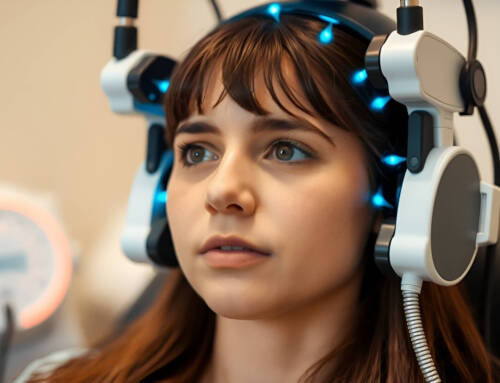
Are you one of the nearly 70 million Americans struggling with sleep disorders? If so, you know firsthand how exhausting and disruptive chronic insomnia can be. Sleepless nights don’t just make you tired; they affect your mental health, focus, productivity, and overall quality of life. While medications and cognitive behavioral therapy (CBT) are common approaches, they don’t always work for everyone. But there’s growing interest in a newer, non-invasive approach: TMS therapy.
Can TMS help with insomnia? That’s the question we’re here to explore. In this post, we’ll break down how TMS treatment works, why it’s being considered a promising option for sleep disorders like insomnia, and what you should know before considering it. You’ll also learn how BrainHealth Solutions offers compassionate, expert care using the latest innovations in mental and brain health.
Understanding Insomnia: More Than Just a Sleepless Night
Insomnia is not just a matter of having a bad night’s sleep here and there. It’s a persistent issue that can have serious consequences if left untreated. Chronic insomnia is defined as difficulty falling or staying asleep at least three nights per week for three months or longer. According to the Centers for Disease Control and Prevention (CDC), roughly 1 in 3 adults in the U.S. doesn’t get enough sleep on a regular basis.
The effects of chronic insomnia go beyond fatigue. Poor sleep can impair memory, concentration, mood, and even immune function. Over time, it increases the risk of developing depression, anxiety, heart disease, and other serious health conditions.
Despite its prevalence, insomnia often proves challenging to treat. Medications may help in the short term, but can come with side effects or risk of dependency. Behavioral therapies, while effective for many, require commitment and time, and don’t work for everyone.
This gap in effective, sustainable treatments has led researchers and clinicians to explore transcranial magnetic stimulation, or TMS, as a new frontier in insomnia care.
What Is TMS Therapy?
TMS therapy is a non-invasive, FDA-approved treatment that uses magnetic pulses to stimulate specific areas of the brain. It’s most commonly used to treat major depressive disorder, especially in people who haven’t responded to medication. However, growing evidence suggests that TMS treatment may also have applications for other conditions, including insomnia.
During a TMS session, a specialized device delivers focused magnetic pulses to the prefrontal cortex, an area involved in mood regulation, decision-making, and sleep. These pulses help to reset or rebalance brain activity patterns, essentially “waking up” underactive neural networks or calming down overactive ones.
Unlike medications, TMS doesn’t involve systemic side effects. It doesn’t require anesthesia or downtime, and patients can resume normal activities right after a session. A full course typically involves multiple sessions over the course of 4 to 6 weeks.
The Science Behind TMS for Insomnia
So, can TMS help with insomnia? Researchers think so, and here’s why.
Sleep is regulated by a complex network of brain regions and neurotransmitters. In people with chronic insomnia, there are often disruptions in the brain’s natural sleep-wake cycles, particularly in the prefrontal cortex and thalamus. These areas are closely tied to attention, stress, and emotional regulation, all of which can influence sleep quality.
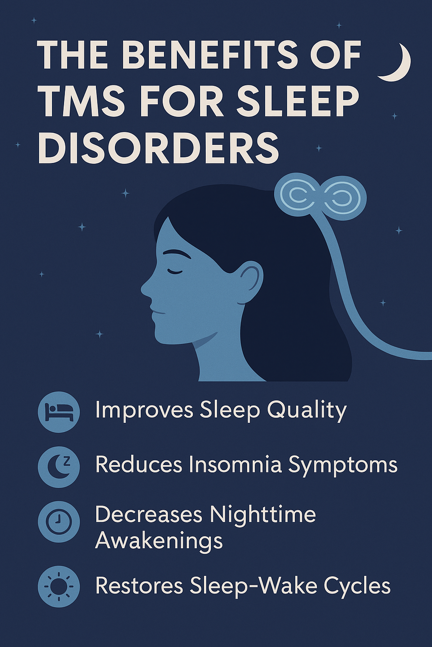
TMS therapy, by targeting the prefrontal cortex, can help restore healthier brain activity patterns. In clinical studies, TMS has been shown to improve sleep efficiency, increase total sleep time, and reduce nighttime awakenings. For example, a 2022 study published in The Journal of Clinical Sleep Medicine found that repetitive TMS (rTMS) led to significant improvements in sleep quality among patients with both depression and insomnia.
Even more promising, early studies show that TMS may improve insomnia independently of its effects on mood. This means that even people who aren’t experiencing depression may benefit from TMS for insomnia.
Why People with Insomnia Should Consider TMS Treatment
Many people with insomnia feel like they’ve tried everything- sleep hygiene, medications, supplements, therapy, with little relief. That’s where TMS treatment comes in.
Here’s why it’s worth considering:
- Non-invasive and drug-free: TMS does not involve medications, which means no risk of dependency or long-term side effects.
- Targeted brain stimulation: Unlike general sleep aids, TMS addresses the underlying brain activity patterns that contribute to insomnia.
- Minimal side effects: The most common side effect is mild scalp discomfort during sessions, which usually resolves quickly.
- Lasting effects: Studies suggest TMS can lead to long-term improvements in sleep quality and overall brain function.
At BrainHealth Solutions, our trained clinicians use personalized protocols to determine if TMS therapy is a good fit for you. Every brain is unique, and our treatment plans reflect that.
Who Is a Good Candidate for TMS for Insomnia?
TMS therapy isn’t right for everyone, but it can be a transformative option for individuals struggling with chronic insomnia, especially when other treatments haven’t provided lasting relief. You may be a good candidate for TMS for insomnia if your sleep difficulties are persistent, interfere with daily life, and haven’t improved with medication, lifestyle changes, or behavioral therapy.
TMS treatment is particularly promising for people whose insomnia is linked to mood disorders such as depression or anxiety. Since TMS has long been FDA-approved for treatment-resistant depression, individuals experiencing overlapping symptoms may benefit most. If your insomnia feels like more than just poor sleep, if it’s wrapped up in racing thoughts, low mood, or stress, TMS might help address the root cause, not just the symptoms.
Candidates should also be in generally good physical health and not have a history of seizures or metal implants in or near the head (like cochlear implants or aneurysm clips), as these can pose safety concerns. Our experienced clinicians in Orange County, CA, conduct a thorough screening process to ensure TMS is safe and appropriate for each patient’s unique circumstances.
What to Expect During TMS Therapy at BrainHealth Solutions
What to Expect During TMS Therapy
If you’re considering TMS treatment for insomnia, it helps to know exactly what the process looks like, so you can walk in feeling confident and prepared.
Comfortable, Non-Invasive Sessions
Each session takes place in a quiet outpatient setting. You’ll sit in a comfortable chair while a technician places a small device gently against your scalp. This device sends targeted magnetic pulses to specific areas of your brain involved in sleep and mood regulation. You’ll stay fully awake and alert during the process.
Session Duration and Schedule
A typical session lasts between 20 and 40 minutes, depending on your personalized treatment plan. Most people undergo TMS five days a week for four to six weeks. While it may sound like a commitment, many patients are surprised by how easily it fits into their routine.
No Downtime or Sedation
There’s no sedation, and no recovery time needed. You can drive yourself to and from your appointments and return to normal daily activities immediately afterward.
What It Feels Like
Some people describe the sensation as a light tapping or tingling on the scalp during the pulses. It’s usually well-tolerated. Mild side effects like temporary scalp sensitivity or a headache can happen but tend to resolve quickly as your body adjusts.
Ongoing Support Throughout
Our team will be with you every step of the way, answering questions, monitoring your progress, and tailoring your treatment as needed. We’re here to help you feel comfortable and supported from your first consultation to your final session.
TMS Therapy in Orange County
If you live in Orange County, you have access to one of the region’s most trusted centers for advanced brain health care. At BrainHealth Solutions, we specialize in innovative treatments like TMS therapy, designed to improve sleep, mood, and overall quality of life.
Whether you’re struggling with chronic insomnia on its own or in combination with anxiety, depression, or PTSD, our team is here to help. We take the time to understand your unique challenges and create a treatment approach that respects your preferences, goals, and lifestyle.
Is TMS the Answer to Your Insomnia?
If you’ve spent countless nights staring at the ceiling, exhausted and frustrated, it might be time to consider a new approach. While no treatment works for everyone, TMS for insomnia offers a promising, research-backed alternative for people who haven’t found relief through traditional methods.
We believe everyone deserves the chance to live and sleep well. Our compassionate team is here to help you explore whether TMS therapy could be the missing link in your journey toward better rest and overall health.
Ready to Sleep Better?
If you’re curious about TMS treatment for insomnia, we invite you to reach out to the experts at BrainHealth Solutions. Schedule a consultation to learn more about how our personalized approach to TMS therapy can help you reclaim your nights and improve your days.
Contact us today to get started, because a good night’s sleep shouldn’t be out of reach.